
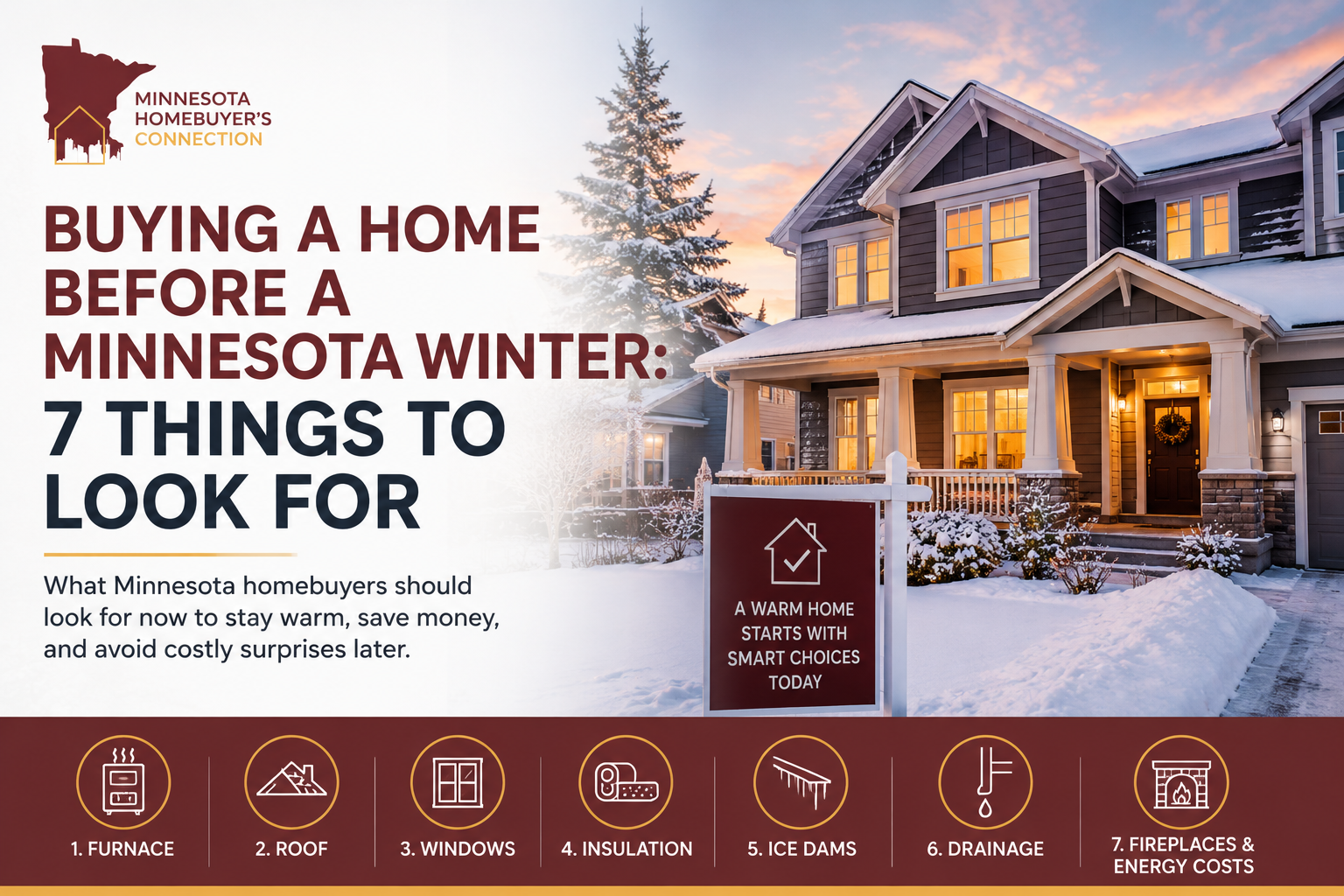
Buying a Home Before a MN Winter: 7 Things to Look For
MN Home Buyers Connection
September 7, 2026
Buying a home in Minnesota during the crisp days of late summer or fall hides a distinct reality: subzero temperatures are weeks away. A property that looks pristine on a mild September afternoon still has to perform when snow piles up and the furnace runs for months on end. This is true whether you plan to spend your winters cozying up inside or heading north to explore frozen waterfalls at Tettegouche State Park. According to the Department of Energy, heating accounts for about 42% of a typical homeowner's utility bill, and in Minnesota, that percentage often trends much higher.
If you are shopping for a home before the snow flies, you have a unique opportunity. You can evaluate the house based on how it handles our state's toughest season. Knowing what to look for keeps you from inheriting expensive repairs, leaving more room in your budget for financially favorable mortgage options and down payment assistance programs.
How to Evaluate the Furnace Before You Buy
You never want to discover your heating system has problems during the first cold snap. Ask the seller for the furnace's age, its maintenance history, and documentation of recent professional service.
During your home inspection, pay close attention to the heating infrastructure. An older furnace isn't an automatic reason to walk away, but knowing its exact condition helps you budget for a future replacement. Ask your inspector to gauge how efficiently the system can heat the home through a five-month Minnesota winter, not just whether it turns on today.
Why Roof Condition Matters for Winter Home Buying
Minnesota roofs handle heavy snow loads, ice accumulation, and dramatic freeze-and-thaw cycles. Walk the perimeter and look for missing shingles, visible sagging, or signs of previous leaks.
You need to know the approximate age of the roof. A surface that seems perfectly fine in early autumn can fail under the weight of January snow. A thorough home inspection checklist always includes a deep dive into roofing health, as replacing a roof is one of the most significant expenses a new homeowner faces.
Checking Windows and Exterior Doors for Drafts
Drafty windows make a home uncomfortable and drive up your energy bills. As you walk through a prospective property, look for damaged seals, condensation trapped between window panes, visible gaps in the framing, or sashes that stick.
A chilly indoor environment does more than raise your heating bills; it also impacts daily comfort and indoor activities. For instance, if drafty windows keep the home on the cooler side, trying to grow holiday flowers can take longer than expected. According to the Minnesota State Horticultural Society's advice on how to plant amaryllis bulbs, cool indoor temperatures can easily extend the blooming process beyond the typical six to eight weeks.
Check the weather stripping on all exterior doors. Older windows are common in Minnesota real estate, but understanding their condition gives you a much better grasp on the home's true energy efficiency. If you know you need to replace windows, you can work with a local loan officer to structure your financing to accommodate those future upgrades.
The Hidden Importance of Attic Insulation and Ventilation
What sits above the ceiling often matters more than the cosmetics of the living room. Proper attic insulation keeps warm air inside your home where it belongs. Proper ventilation controls moisture and regulates the temperature in the attic space.
Both factors heavily dictate your home energy efficiency. If a house lacks adequate insulation and ventilation, it becomes highly susceptible to ice dams. Ask your inspector to physically check the attic depth and verify that the soffit vents remain clear of debris.
Spotting Previous Ice Dam Damage
Those long icicles hanging from a roof edge might look beautiful, but they often signal poor heat retention. Ice dams form when warm air escapes through the roof, melting the snow. That water runs down to the colder eaves, freezes solid, and eventually pushes water backward under your shingles.
Look carefully for signs of previous moisture damage. Check the ceilings near exterior walls, inspect the attic decking, and look for water stains around window frames. Past ice dams mean the house likely needs better air sealing and insulation.
Testing Property Drainage Before the Ground Freezes
Water management is easy to overlook when you are busy admiring a renovated kitchen. But Minnesota's spring snowmelt puts every foundation to the test.
Walk around the exterior and study the grade of the yard. Does the ground slope safely away from the house? Do the gutters and downspouts push water far from the foundation? Understanding how water moves across the property now helps you prevent flooded basements when the snow finally melts.
Calculating the True Cost of a Minnesota Winter
Your monthly mortgage payment is only one part of your housing budget. A larger home with aging windows and an outdated furnace costs considerably more to heat than a compact, highly efficient property.
If you are relocating from out of state, establishing your new household involves several key milestones. Once you have established a legal residence in the state for at least 60 consecutive days, you can transition your official documents and enjoy local perks, such as qualifying for a resident Minnesota fishing license.
Additionally, if you are purchasing this property as an investment or plan to hire assistance to oversee it, you must navigate local rental regulations. Under Minnesota landlord-tenant law, property owners are required to perform background checks on managers who have access to the residential premises.
Review the previous owner's utility costs if they are available. Factor in snow removal needs for the driveway and sidewalks. If you map out these carrying costs early, you can structure your loan to ensure comfortable monthly payments.
Frequently Asked Questions
Does a winter home purchase require a different type of home inspection?
The standard inspection covers the same systems, but an inspector will pay hyper-focused attention to the HVAC system, roof condition, and insulation. They will also look for freezing hazards in exterior plumbing.
Thinking About Buying a Home in Minnesota?
You don't have to figure out the process by yourself.
Take our 30-second MN Home Buyers Connection survey to get connected with local real estate and mortgage professionals who understand Minnesota homes, neighborhoods, financing options, and the realities of buying here.
Start by learning what's possible—then decide what your next step should be.