Thinking About a Heat Pump or Energy Upgrade? Check Rebate Rules Before Buying!
MN Home Buyers Connection
September 13, 2026
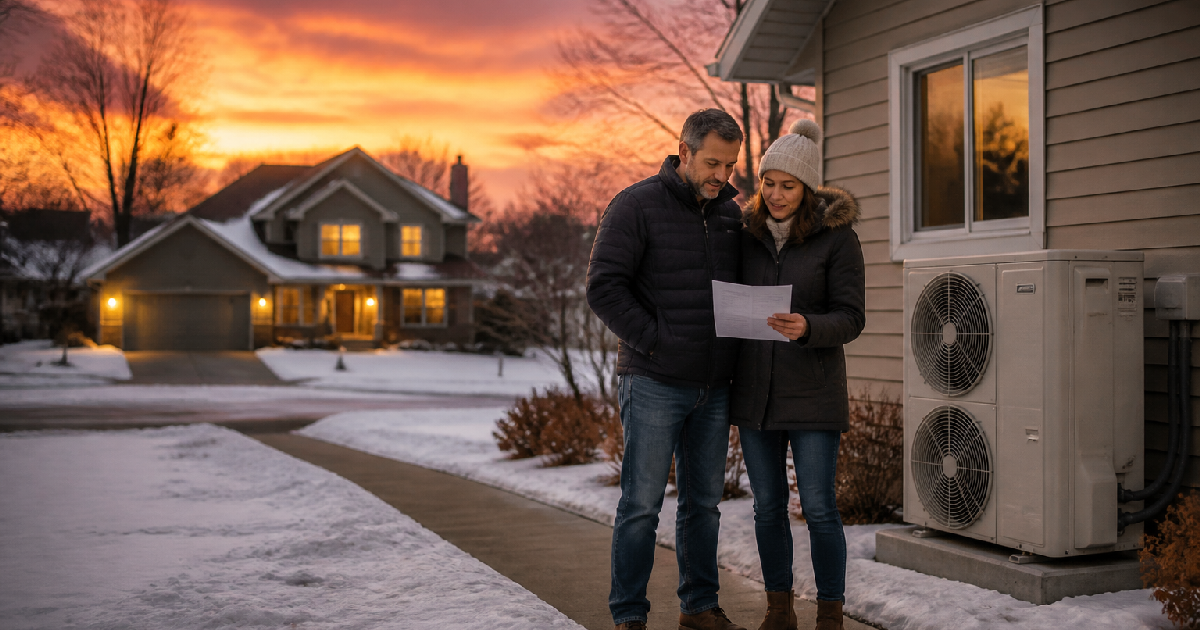
You are staring at an aging furnace or a high winter heating bill, and you have probably heard the buzz about massive government rebates for heat pumps and electrical upgrades. During a typical Minnesota winter, when January temperatures in Minneapolis regularly drop well below freezing, energy bills can quickly get out of hand. Before you sign a contract with a local HVAC installer, you need to know one crucial fact: as of the June 12, 2026 update from the Minnesota Department of Commerce, the highly anticipated Save Energy Minnesota program has not yet launched. If you buy equipment today, current federal rules indicate you will not qualify for retroactive rebates later.
Minnesota is still awaiting formal approval from the U.S. Department of Energy (DOE). Ongoing federal rule changes have impacted the state's implementation timeline, leaving many homeowners in a holding pattern. Understanding how these rules work right now can save you thousands of dollars and prevent a frustrating surprise at tax time.
Decoding Save Energy Minnesota
The state is organizing its upcoming energy incentives under the umbrella of Save Energy Minnesota. This initiative bundles federal funding with state-specific programs. To figure out what applies to your home, you need to understand the three main components.
HEAR Minnesota
The Home Electrification and Appliance Rebates (HEAR) program focuses on specific equipment. Managed under guidelines highlighted by the Minnesota Department of Commerce HEAR page, this is where you will find point-of-sale discounts for heat pumps, electrical panel upgrades, induction stoves, and heat pump water heaters. These incentives focus heavily on ENERGY STAR qualified heat pumps and other highly efficient electrical appliances. These rebates are income-based, meaning they offer the highest financial support to low- and moderate-income households.
HOMES Rebate Minnesota
The Home Efficiency Rebates (HOMES) program takes a whole-house approach. Instead of paying you for buying a specific appliance, this program rewards overall energy reduction. If you undertake a major energy retrofit that includes heavy insulation, air sealing, and HVAC upgrades, the HOMES program calculates your rebate based on the total modeled or measured energy savings of your property.
Minnesota Residential Heat Pump Rebate
On top of federal funds, the state has its own specific heat pump incentives. However, the Minnesota Residential Heat Pump Rebate is closely tied to HEAR eligibility. Current state guidelines require homeowners to meet specific conditions before qualifying for the heat pump money, including completing a qualifying energy audit and addressing necessary insulation and air-sealing requirements first.
Why Timing Your Upgrade Matters
The biggest risk for homeowners right now is moving too quickly on discretionary upgrades. Current federal HEAR guidance clearly states that equipment purchased before the official program launch and approval will not be eligible for retroactive rebates. If you install a heat pump today hoping to claim a Minnesota heat pump rebate 2026 allocation later, you will likely be denied.
This creates a distinct tradeoff. If your furnace fails in the middle of January, you cannot wait months for a government program to open. You need a safe, warm house now. Necessary emergency repairs must take priority. But if you have a functioning system and are simply looking to improve your home's efficiency or switch away from fossil fuels, patience is the most profitable strategy.
How to Prepare for Minnesota Energy Efficiency Rebates
While you wait for the official launch, you can lay the groundwork for a smooth upgrade process.
- Find your Area Median Income (AMI): Look up your county's AMI. Most HEAR benefits scale based on whether you make under 80 percent or between 80 and 150 percent of this local median. For a concrete example, local guides like the Hopkins Climate Solutions Fund eligibility chart show that an 80 percent AMI threshold for a four-member household is currently set at $104,200, while a two-member household is capped at $83,400. Checking your specific local brackets helps you estimate your savings accurately.
- Assess your home envelope: Heat pumps work best in well-insulated homes. Schedule an energy audit now to identify drafts and missing insulation, as air sealing is a prerequisite for state funding.
- Check your electrical panel: Upgrading to electric heating often requires more capacity. Have an electrician check if your current service panel can handle the increased load.
- Explore existing utility programs: Local utilities like Xcel Energy or CenterPoint often run their own equipment rebates independent of the upcoming federal programs.
- Protect your financial data: Never give your bank information to a contractor claiming they have exclusive access to Save Energy Minnesota funds before the state officially opens the program.
Frequently Asked Questions
Can I claim a rebate for a heat pump I bought last year?
No. According to current guidelines, retroactive rebates for equipment purchased before the official program launch are not permitted under federal rules.
Do I have to do insulation work before getting a heat pump?
If you want the specific Minnesota state heat pump rebate, yes. The state currently requires homeowners to complete an energy audit and meet certain insulation and air-sealing conditions to qualify.
Are HOMES and HEAR the exact same thing?
No. HEAR provides income-capped rebates for specific appliances. HOMES provides rebates based on total energy savings for whole-home retrofits, and it is available to a wider range of income levels.
Your Next Step for a More Efficient Home
Navigating home improvements, finding trustworthy local contractors, and figuring out the financial side of homeownership can feel overwhelming. You do not have to figure it out alone.
If you are planning your next home project or exploring financing options for major upgrades, MN Home Buyers Connection can help. We connect Minnesota residents with local professionals who understand state-specific programs and can guide you toward the most financially favorable outcomes for your property. Complete our simple survey to find the right local expert for your situation.